
Mortgages
First Time Buyer Mortgage Advice That Starts With You
It should begin with a straight answer to the question you actually have: can I afford this, and if not yet, when? Everything else follows from that.
- Deposits from 5%
- £0 broker fees
- Gifted deposits welcome
- No credit check to start
Free, no obligation, and no credit check to get started.
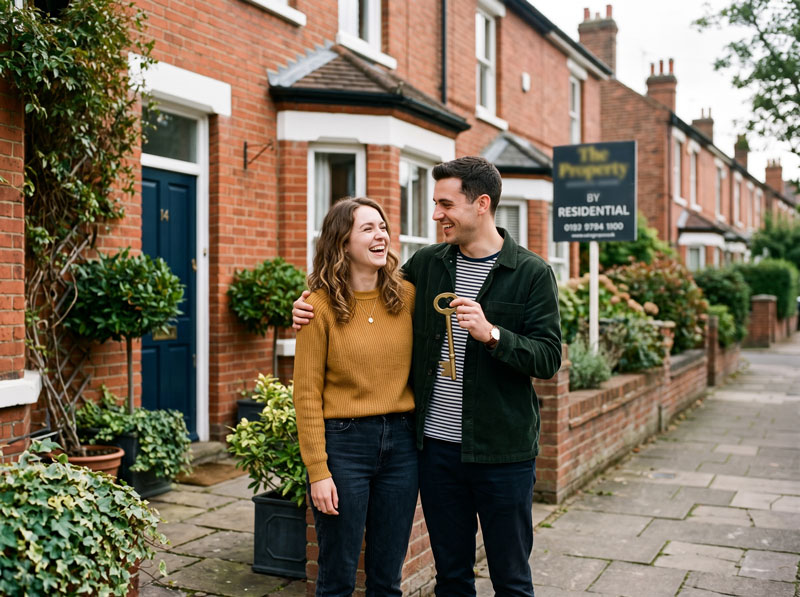
Buying a first home involves more moving parts than it used to, and most of them work in your favour once someone explains them properly. We give you the real number and explain what shapes it.
Our advice costs you nothing. Lenders pay us when your case completes.
How Much Deposit Do You Need
Five percent is the practical minimum for most first time buyers. Ten percent widens the choice of lenders noticeably and usually improves the rate you are offered, and each further step up to twenty five percent adds more lenders and better pricing.
On a 250,000 pound home, five percent is 12,500 and ten percent is 25,000. That gap is worth putting real numbers against before you decide to keep saving, because another year of rent has a cost too.
What Counts Towards What You Can Borrow
Lenders start around four to four and a half times income, then differ sharply on what income means. Basic salary always counts in full. Overtime, bonuses, commission, shift enhancements and second jobs are where the spread appears.
Your outgoings matter too. Clearing a small debt before applying sometimes buys you more borrowing than saving the same amount as deposit. Check your borrowing.
Getting Your Credit File Ready
You do not need a perfect record, but you do need a visible one. Register on the electoral roll, keep every payment on time for at least six months, and avoid new credit applications in the months before your mortgage.
A thin credit file is a different problem from a damaged one, and it has a different solution. See our guide for buyers new to the UK.
Family Help With the Deposit
Gifted deposits are normal and lenders accept them every week. What they need is a clean paper trail: bank statements from the person giving the money, a signed letter confirming it is a gift rather than a loan, and their identity documents. If the money is coming from family overseas, start that paperwork when you start viewing. More on overseas deposits.
Schemes and Shared Ownership
Shared ownership lets you buy a share of a property, often between 25 and 75 percent, and pay rent on the rest. In expensive areas it can be the difference between buying and not buying. It also brings service charges, rules about selling and a smaller pool of lenders.
It is a genuine option rather than a trick. We will run it beside a standard purchase on your actual numbers, and tell you plainly when it does not stack up.
The Costs Beyond the Deposit
- Stamp duty. First time buyer relief means many buyers pay nothing up to the threshold, though it depends on the price and your residence position.
- Solicitor fees, usually 1,000 to 2,000 pounds including searches.
- A survey, from a basic condition report to a full building survey on an older property.
- Moving costs, and the first month of bills arriving at once.
Budgeting for these early is the difference between a smooth completion and a stressful one. MoneyHelper sets out the running costs clearly.
New Build or Older Home
New builds come with warranties, better insulation and developer deadlines that put real pressure on your timeline. Older homes bring character and survey findings. Flats add two more questions: how many years are left on the lease, and what the service charge and ground rent are. A lease under about 80 years starts to affect both value and lending.
What If You Are Declined
A decline is not the end and it is not a verdict on you. It usually means one lender’s criteria did not fit, and the useful question is which part: the income assessment, the credit file, the deposit source or the property itself. Once we know, we can often place the same case elsewhere.
What does harm you is applying repeatedly and hoping. Each full application leaves a hard search on your file. This is the main reason we check criteria before anything formal happens.
No paperwork and no credit check. An adviser calls you back with your real options.
Start nowor call 0117 370 6363Frequently Asked Questions
Can I really buy with a 5 percent deposit?
Yes, with the right lender and a stable income. Ten percent makes approval simpler and usually cheaper, so we will show you both paths and let you choose.
How much will my monthly payment be?
It depends on the loan size, the rate and the term. A longer term lowers the monthly payment but costs more overall in interest. We will show you the same mortgage over 25, 30 and 35 years.
What is an agreement in principle?
An early indication from a lender that it would likely lend you a certain amount. Estate agents often ask for one before accepting an offer. It is not a binding commitment.
Do I need a survey if the lender does a valuation?
They are different things. The lender’s valuation protects the lender, not you. A survey is for your benefit and can save you far more than it costs on an older property.
I am on a work visa. Can I still buy my first home?
Yes. Some lenders will consider you within your first year in the UK. The lender list is shorter, so choosing correctly first time matters more.
Can I buy with a friend or a sibling?
Yes, joint applications are not limited to couples. Both incomes are assessed and both names go on the deeds, so agree in advance what happens if one of you wants to sell.