

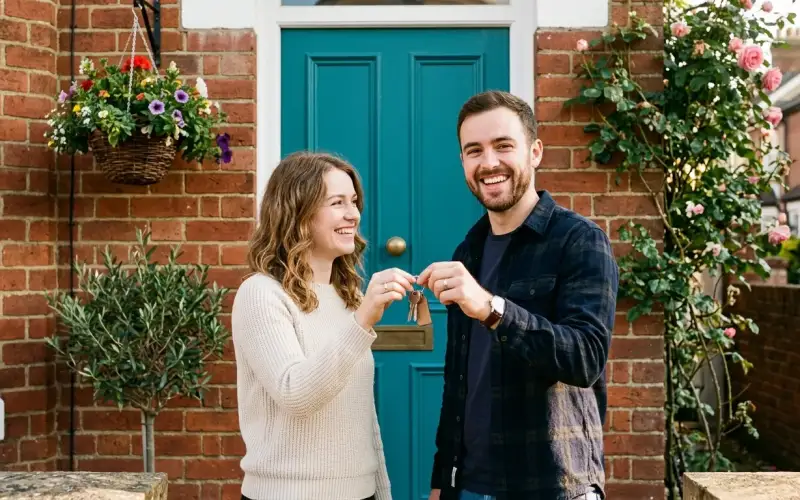
Buying with someone else can raise the amount you can borrow and make the deposit easier to reach. It also ties your finances together, so it helps to understand how it works before you commit.
How lenders assess a joint application
Lenders add together both incomes and both sets of commitments. They check both credit files, and a weak record on one can affect the whole application. Most lenders allow up to four people on a mortgage, though many use only the two highest incomes when working out the loan.
Shared responsibility
Each person named on the mortgage is responsible for the whole debt, not only for their share. If one person stops paying, the lender can ask the other for the full payment. A joint mortgage also links your credit files, so the other person's later borrowing can affect you.
Two ways to own the property
Joint tenants. You own the whole property together. If one of you dies, it passes automatically to the other. Common for married couples.
Tenants in common. Each person owns a set share, which can be unequal and can be left to someone else in a will. Common where deposits are unequal, or when buying with friends or relatives.
Your solicitor will ask which you want. It is a legal decision, so take their advice.
When deposits are unequal
A deed of trust, drawn up by your solicitor, records who put in what and how the proceeds would be divided on a sale. It costs far less than a dispute later.
Buying with family
Parents and adult children, or brothers and sisters, often buy together. The points to check are:
- Whether everyone will live in the home.
- Whether anyone already owns a property, which can affect the Stamp Duty payable.
- The ages of the borrowers, because that can limit the term.
Mixed circumstances
One applicant may be a British citizen and the other on a visa, or one may be employed and the other self-employed. Lenders handle these combinations differently, so criteria matter more than usual.
Agree in advance what happens if one of you wants to sell or can no longer pay. An awkward conversation now prevents a difficult one later.
How we help
We look at both sets of circumstances together and find lenders that suit the combination. Our borrowing guide shows how two incomes are treated.
Common questions
Can we be on the mortgage in unequal shares?
The debt is always shared in full. Ownership of the property can be unequal through tenants in common.
Can one of us come off the mortgage later?
Yes, if the lender agrees that the remaining borrower can afford it alone. Legal work is needed.
Your home may be repossessed if you do not keep up repayments on your mortgage.